What Happens During a Cat Osteopathy Session?
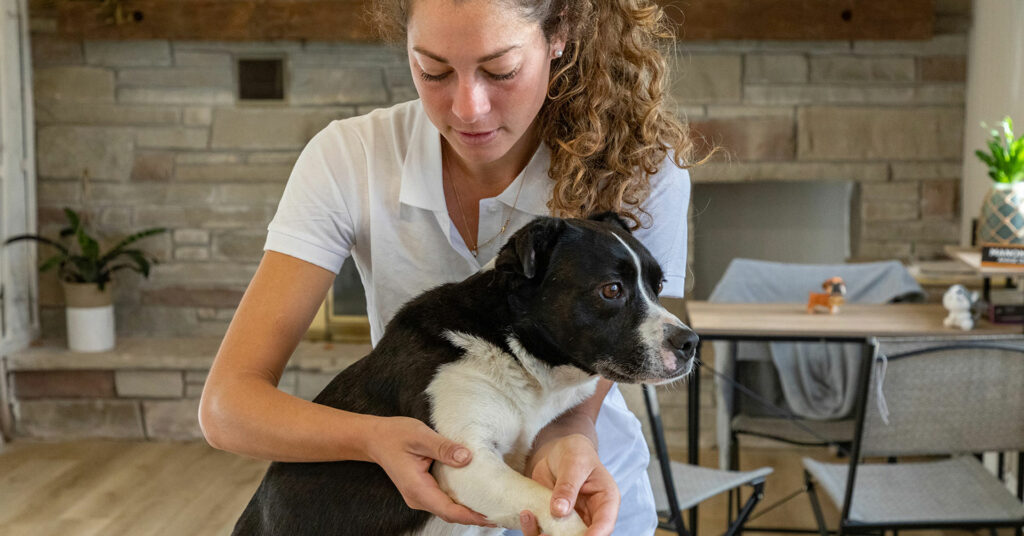
A cat osteopathy session checks three things before any hands-on work begins : mobility, pain or tension, and behaviour. Manimal’s Manon Turbé, a certified animal osteopath based in Waterdown, Ontario, builds every appointment around observation first, gentle treatment second. This guide walks through what happens before, during, and after a visit, and how it fits alongside your veterinarian’s care : see our cat consultations page for pricing and booking.
What is a cat osteopathy session?
A cat osteopathy session is a short, hands-on appointment built on observation and gentle manual therapy : not the bone disease sometimes labelled “osteopathy” in veterinary textbooks. An animal osteopath works with touch, not tools : no drugs, no forceful adjustments, no audible cracks by default. Manon Turbé finds where a cat’s body compensates : a stiff shoulder, a tense lower back, a hip that won’t fully extend : then treats that restriction directly. A session runs 30 to 45 minutes and always ends with a clear plan for what to watch at home. Osteopathy does not diagnose disease and does not replace a veterinary exam; it works alongside your vet, addressing mobility and comfort once a medical cause has been ruled out or is already being managed.
Before the session : what to expect
Before a cat osteopath appointment, expect questions before hands-on work : Manon asks about daily habits, recent falls, medication, and any change in how the cat jumps or sits. Bring the cat in its usual carrier : a familiar smell lowers stress before the appointment even starts. Arrive five to ten minutes early so the cat settles in a quiet waiting area, free of other animals and sudden noise. Manimal’s clinic sits in Waterdown, Ontario, and Manon also travels within about an hour’s drive : Milton, Guelph, Cambridge, Burlington, Hamilton, and Toronto are all within reach for a home visit.
Step by step : what happens during the appointment
A cat osteopathy session follows five steps, always in the same order: observation, hands-on assessment, gentle treatment, a short rest, then guidance for the owner. Skipping one would mean treating a symptom without understanding its cause.
- Observation and history : Manon watches the cat move before touching it, and asks about recent behaviour changes such as a cat that stopped jumping on the couch.
- Hands-on assessment : gentle palpation, finger by finger, along the spine and limbs finds the exact restriction rather than a vague area of discomfort.
- Gentle manual treatment : small, precise movements release the restriction found above; cats rarely need the audible “crack” associated with human chiropractic.
- Observation after treatment : Manon watches the cat move again in the room; a longer stride or a full stretch shows an immediate, visible change.
- Owner guidance and follow-up :Manon explains what she found and recommends a follow-up interval based on the cat’s age and condition.
The three things a cat osteopath checks
A cat osteopath must be judged on the same three axes at every visit, not on the treatment technique alone. For a first-time appointment, mobility, pain, and behaviour together build a picture no single test could give on its own :a cat can hide pain well, but rarely hides all three signs at once.
Why Manimal is the right fit for this kind of session
Manimal is a relevant choice for a cat osteopathy session because Manon Turbé combines a dedicated clinic, a defined travel radius, and clear guidance on frequency and follow-up. She has run her practice from Waterdown, Ontario since August 2023, welcoming cats and dogs on-site or within about an hour’s drive of the clinic.
Manimal’s approach favours a gentle, respectful method : no forceful adjustment, sessions adapted to each cat’s stress tolerance, and a plan for what to watch at home after every visit. Manon recommends two to four sessions a year to maintain mobility in most cats : full pricing and scheduling sit on the cat consultations page rather than repeated here.
For a first-time booking, the safest approach is to describe the cat’s age, behaviour changes, and any veterinary follow-up already in place. Manon can then confirm whether osteopathy is a fit before the appointment, and whether a vet check should come first.
How long does a cat osteopathy session last?
A typical cat osteopathy session lasts between 30 and 45 minutes, though this can vary with the cat’s tolerance and the number of areas assessed. Sessions stay short and calm to respect the cat’s stress threshold throughout the appointment.
Is cat osteopathy painful?
No. Cat osteopathy relies on gentle, non-invasive manual techniques adapted to each animal’s tolerance. Manon monitors the cat’s reactions throughout and adjusts pressure and pace, stopping immediately if the cat shows discomfort or stress.
Do I need a vet referral before booking a cat osteopath?
A referral isn’t always required, but osteopathy works best alongside veterinary care, not instead of it. If a cat has an undiagnosed condition, a vet check-up first rules out issues osteopathy can’t address, such as infections or fractures.
What should I do after my cat's osteopathy session?
Most cats benefit from a quiet rest period after treatment. Owners should watch their cat’s behaviour over the following days and report any change, improvement or new discomfort, at the next follow-up.
