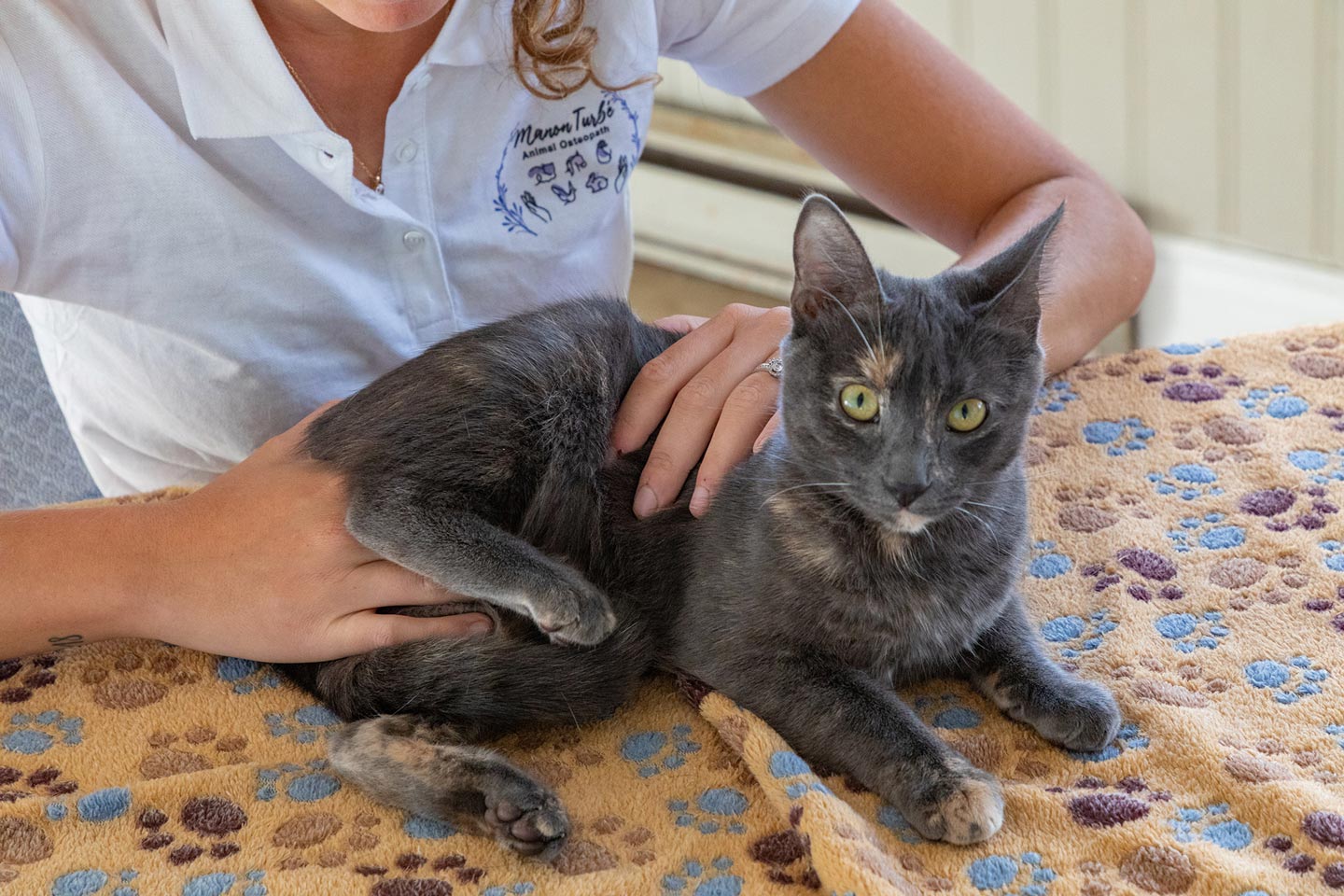
Cat consultations
Cats skeletons are a marvel of evolution and consist of between 230 and 250 bones. This structure, which has less mass than a dog’s skeleton, gives cats their characteristic lightness and agility. Their spinal column, which is made up of more than 50 vertebrae, is amazingly flexible, with elastic intervertebral discs that give them exceptional mobility and agility.
A cat’s skull, which has large eye sockets, promotes binocular vision, while its powerful jaw is equipped with teeth designed for cutting. The chest cavity protects their vital organs, and their clavicles are not directly connected to the rest of the skeleton, which increases their ability to squeeze into narrow spaces In addition, the cat’s limbs are designed for speed. Meaning they are silent and elegant in movement. Finally, the tail is composed of several small vertebrae that are essential for balance.
These characteristics reflect the cat’s hunting lifestyle, with a skeleton that is designed to absorb the impact of jumping or falling. Kittens are born with a partially developed skeleton that hardens with age. However, like every living being, cats can suffer from bone related problems such as arthritis or breaks. This is why it’s important to consultant a cat osteopath to take care of them.
To summarize, what is osteopathy for cats and how does it work ?
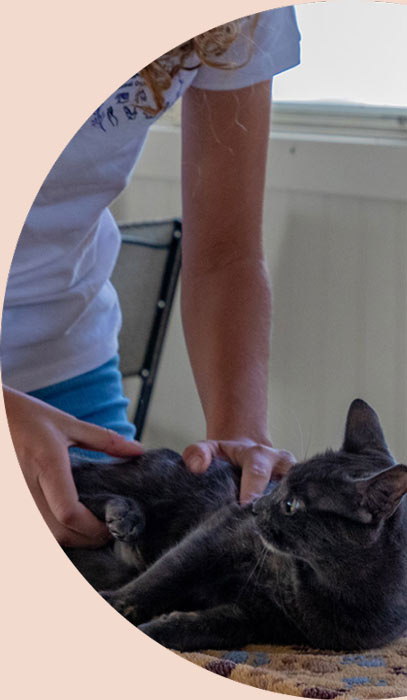
Osteopathy for cats is a gentle manual therapy designed to restore mobility and balance in the body. Often combined with physical training for cat programs, it helps relieve pain, improve movement, and support recovery after injury, surgery, or chronic musculoskeletal issues.
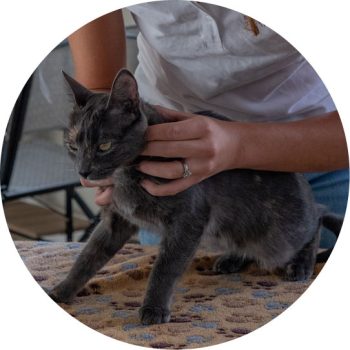
Cat osteopathy: When is it needed?
Cat osteopathy can be beneficial at several key moments of their lives. While they are growing, osteopathy can help ensure that bone and muscle development occurs harmoniously, especially if the kitten is very active or has suffered from falls. I provide treatments to relieve any tension or misalignments caused by trauma.
In addition, if you notice any changes in your cat’s behaviour during their life, such as a reluctance to jump or reduction in their activity levels, this can indicate discomfort or pain which cat rehabilitation osteopathy can help. With age, cats can develop arthritis and other joint problems. Re-education feline osteopathy can help them have a better quality of life by reducing pain and increasing flexibility.
If they have digestive problems, you should know that osteopathy can also be helpful for certain internal problems (such as digestive or respiratory problems), by improving circulation and the functioning of internal organs. Finally, if your cat is sensitive or stressed, I also offer osteopathy treatments which are calming and reduce the physical tensions associated with stress.
Prices

dog
90.40 CAD

cat
90.40 CAD

horse
146.90 CAD
- Prices vary depending on the species of animals and their location (HST are included).
- Travel costs to be expected.
- Possibility of making preferential rates for professionals with several animals to follow.
- For animal protection associations or shelters, prices are halved.
Frequency
Whether they are indoors or outdoors cats a regular follow-up is important to keep your cat to the best.
The ideal follow-up is 2 to 4 sessions per year.
For what reason?
In prevention: to remove the dysfunctions before the animal compensates
Follow-up of an aging cat (osteoarthritis, difficulty moving)
Follow-up of a growing cat
Follow-up of breeding cats (difficulty mounting a female cat, fertility)
Follow-up of breeding female cats (before/after farrowing, after breastfeeding, before the next mating/litter)
Pre and post operative follow-up
Follow-up after amputation/removal of an eye
Shock or traumatic event (regular and brutal games with other animals, falls, accident)
Lameness, stiffness, irregularity, body aches
Difficulty getting up, lying down, sitting down
Stop jumping on the couch/furnitures
Sudden sensitivity (during petting)
Behaviour change
Digestive problem (regular diarrhea, loose stools, vomiting without medical reason, loss of appetite)
Follow-up during pathologies :
Respiratory (asthma, coryza, etc.)
Dermatological (frequent licking, allergies, etc.)
Orthopedic (back pain, tendinitis, dysplasia, sprain, dislocation, etc.)
Urinary (urinary tract infections, kidney failure, kidney stones, etc.)
Ear inflammation
Contact / Book
What are the key criteria involved in effective cat reeducation ?
| Key criterion | Description |
|---|---|
| Initial assessment | Evaluation of mobility, pain, posture, and behavior |
| Progressive approach | Gradual, adapted exercises with increasing intensity |
| Pain management | Manual techniques, controlled rest, adapted environment |
| Adaptation to the cat’s temperament | Respecting the cat’s pace, stress levels, and responses |
| Session consistency | Short but regular sessions |
Cat osteopathy is a gentle manual therapy that focuses on restoring mobility, balance, and comfort in a cat’s body by addressing musculoskeletal and functional restrictions.
Osteopathy for cats is used to support recovery after injury or surgery, manage chronic pain, improve joint mobility, and enhance overall physical well-being.
Cat rehabilitation combines therapeutic techniques and adapted exercises to improve strength, coordination, and movement, especially after trauma, surgery, or mobility loss.
Cat reeducation involves progressive and controlled exercises designed to retrain movement patterns, restore functional mobility, and support long-term recovery.
Physical training for cats includes gentle, targeted activities that help build muscle strength, improve balance, and maintain mobility, particularly for senior or recovering cats.
