How Does Veterinary Osteopathy Support Long-Term Animal Well-Being?
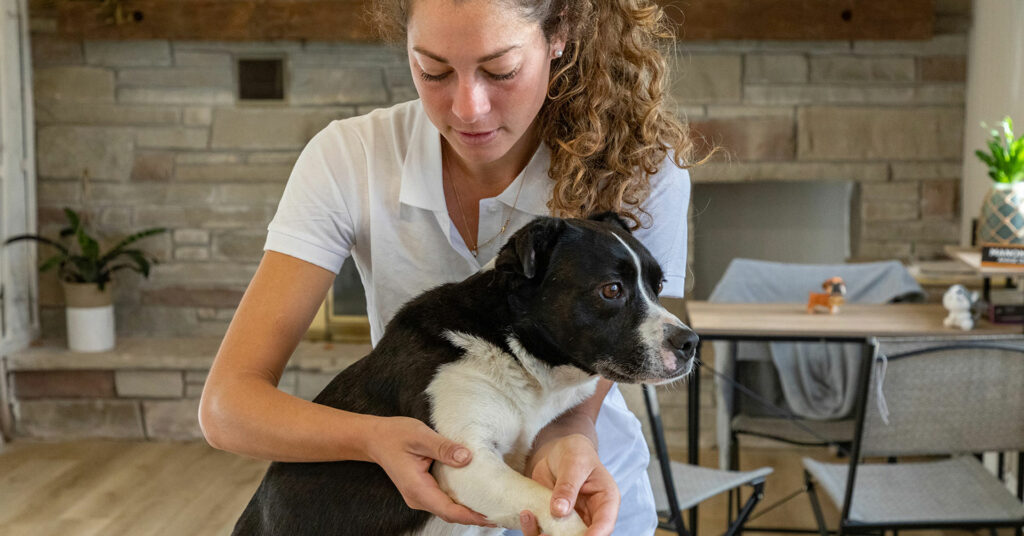
Veterinary osteopathy is a manual approach to animal care that focuses on supporting the body’s capacity to adapt, compensate, and maintain balance over time. Rather than concentrating only on isolated symptoms, veterinary osteopathy examines how structure, movement, and physiological function interact throughout the entire organism. Its role in long-term animal well-being lies in prevention, functional support, and the careful management of chronic or recurrent dysfunctions.
Animals, whether companion animals, sport animals, or livestock, are subject to physical constraints linked to growth, workload, environment, and aging. Subtle losses of mobility in joints, fascia, or internal tissues may not immediately cause visible pain but can progressively alter posture, movement patterns, and overall comfort. Veterinary osteopathy aims to identify these restrictions early and address them before they contribute to secondary issues.
The Relationship Between Structure, Function and Adaptation
A central principle of veterinary osteopathy is the relationship between structure and function. When tissues lose their normal mobility, local circulation and neural communication may be affected. Over time, this can influence digestion, respiration, locomotion, or recovery capacity. By restoring mobility through gentle and adapted manual techniques, osteopathy seeks to support physiological regulation rather than override it.
Long-term well-being also depends on the animal’s ability to adapt to change. Growth phases, training intensity, reproductive cycles, or aging all require continuous adjustment. Veterinary osteopathy does not claim to replace veterinary medicine; instead, it complements it by offering a functional perspective that integrates musculoskeletal, visceral, and cranial systems. This approach can be particularly relevant when clinical examinations or imaging do not fully explain persistent discomfort or reduced performance.
Veterinary Osteopathy as a Preventive Approach
In preventive care, veterinary osteopathy is often used to monitor animals that are apparently healthy but exposed to physical demands. Sport horses, agility dogs, working animals, or breeding animals may develop compensatory patterns that remain unnoticed until performance declines or injuries occur. Regular osteopathic evaluations can help detect asymmetries, stiffness, or coordination issues at an early stage, allowing for timely adjustments in training, workload, or management.
Preventive osteopathy does not aim to predict injuries but to support functional balance. By maintaining tissue mobility and coherence between body systems, it contributes to more efficient movement and a reduced accumulation of mechanical stress over time.
Supporting Animals with Chronic or Recurrent Issues
In animals affected by chronic conditions, the objective of veterinary osteopathy is not curative. Its role is to support quality of life by improving comfort and functional adaptability. Osteopathic care may help reduce excessive mechanical tension around affected areas, improve global mobility, and facilitate compensation strategies that are less costly for the organism.
This approach is particularly relevant for older animals, where maintaining movement and adaptability is a key factor in preserving autonomy and comfort. Gentle techniques are chosen according to the animal’s condition and tolerance, always respecting physiological limits.
Considering the Animal’s Environment and Lifestyle
Veterinary osteopathy also takes into account the animal’s environment and daily conditions. Flooring, saddle or harness fit, housing, nutrition, and workload can all influence tissue health and recovery capacity. An osteopathic consultation often includes observations beyond manual treatment, with practical recommendations aimed at reducing recurring constraints.
This broader perspective supports sustainable improvements rather than short-term relief. Long-term well-being is closely linked to consistency between the animal’s physical capacities and its living conditions.
Respecting Physiological Responses and Professional Limits
Another important aspect of veterinary osteopathy is respect for the animal’s responses. Manual techniques are adapted in intensity and depth according to tissue feedback. The goal is not correction by force, but cooperation with the animal’s physiology.
From an ethical standpoint, veterinary osteopathy requires humility. It does not provide answers to every situation, and its limits must be clearly acknowledged. Collaboration with veterinarians and other animal health professionals is essential. When pain, pathology, or systemic disease is suspected, veterinary diagnosis and medical treatment remain the priority.
Veterinary Osteopathy and Long-Term Well-Being
In summary, veterinary osteopathy supports long-term animal well-being by maintaining mobility, supporting physiological balance, and encouraging adaptive capacity throughout the animal’s life. Its value lies less in isolated interventions than in consistent, thoughtful follow-up that respects both the animal’s biology and its environment.
Sources :
World Health Organization — Benchmarks for Training in Osteopathy — https://www.who.int/publications/i/item/WHO-EDM-TRM-2010.1
American Association of Veterinary State Boards — Complementary and Alternative Veterinary Medicine — https://aavsb.org/licensure-assistance/licensure-assistance/cavm
International Association for Veterinary Osteopathy — Principles of Veterinary Osteopathy — https://iavo.eu
What is veterinary osteopathy and how does it differ from conventional veterinary care?
Veterinary osteopathy is a manual, hands-on approach that focuses on mobility and functional balance within the animal’s body. It does not replace veterinary medicine but complements it. While conventional care targets diagnosis and treatment of disease, osteopathy addresses functional restrictions that may influence comfort and adaptation.
Can veterinary osteopathy be used for preventive care in animals?
Yes, veterinary osteopathy is often used preventively, especially for animals exposed to physical demands such as sport or work. By identifying early mobility restrictions or asymmetries, it may help reduce compensatory patterns that could otherwise contribute to discomfort or injury over time.
Is veterinary osteopathy suitable for older animals?
Veterinary osteopathy can be adapted for older animals, with the goal of supporting mobility and comfort rather than correction. Gentle techniques may help maintain movement and reduce mechanical stress, which can contribute positively to quality of life when integrated with appropriate veterinary supervision.
How often should an animal receive veterinary osteopathy sessions?
The frequency depends on the animal’s age, activity level, and individual situation. Some animals benefit from occasional check-ups, while others may require more regular follow-up. Decisions should be made on a case-by-case basis, ideally in coordination with a veterinarian.
Are there scientific limits to what veterinary osteopathy can achieve?
Yes. Veterinary osteopathy does not treat diseases or replace medical interventions. Its role is functional support. When structural pathology, infection, or systemic illness is present, veterinary diagnosis and treatment are essential, and osteopathy should only be used as a complementary approach.
