Animal Osteopath Near Me: How to Choose the Right Practitioner in Ontario
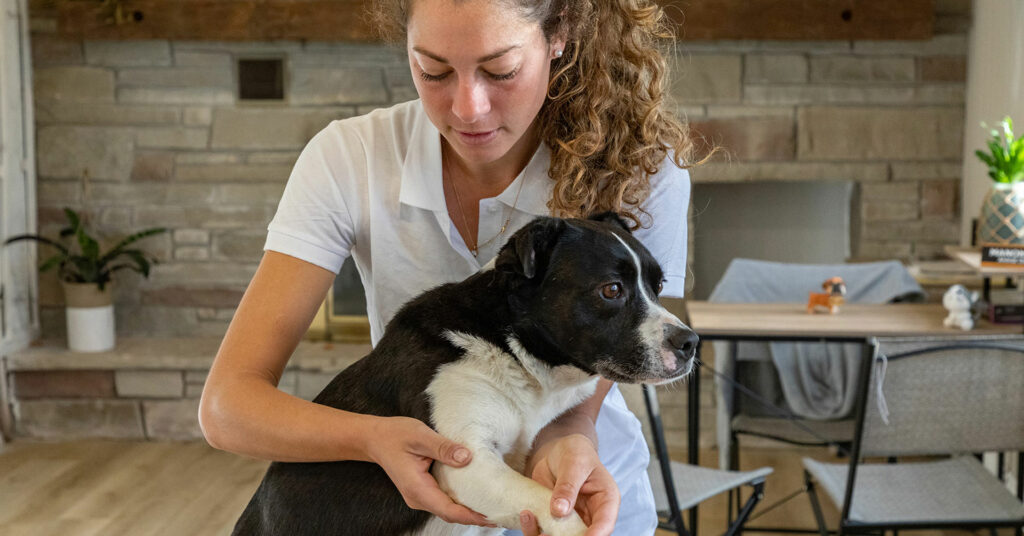
An animal osteopath is a manual therapy practitioner who works on an animal’s musculoskeletal system to support mobility and comfort, without surgery or medication. Manimal helps Ontario pet owners choose the right practitioner for dogs, horses, and cats, with clear criteria rather than vague promises.
What is an animal osteopath?
An animal osteopath is a manual therapy practitioner who works on an animal’s musculoskeletal system, bones, joints, muscles, and connective tissue, to support mobility and comfort. The work is hands-on. There is no surgery, no medication, and no diagnosis of disease involved. An animal osteopath does not replace your veterinarian. The two roles work side by side: the vet handles medical diagnosis and treatment, the osteopath handles mechanical function and movement. In Ontario, owners typically book an osteopathy session for a dog that favours one leg after exercise, a horse that resists the saddle, or a cat that has stopped jumping onto the counter.
The approach changes with the species. A dog session usually starts with watching the animal walk and trot before any hands-on work begins. A horse session takes longer, because assessing the back and pelvis of a 500-kilogram animal in motion means working around tack, ground surface, and the horse’s own tolerance for handling. A cat session is shorter and quieter by necessity, most cats will not tolerate 40 minutes of manipulation, so the practitioner works in short, repeated passes instead. Manimal treats dogs, horses, and cats, and adapts each session to the animal in front of them rather than following a fixed protocol. A first session typically runs 45 to 60 minutes; most cases need 2 to 4 follow-up visits spaced a few weeks apart, though this depends entirely on what the assessment finds.
How do I find an animal osteopath near me?
You find an animal osteopath near you through three channels: a professional registry, a referral from your veterinarian, or a direct search by city. Each one filters for something different, and combining two of them gives you a safer shortlist than a single Google search.
Check a professional registry first. The Association of Animal Osteopaths and RAMP (Register of Animal Musculoskeletal Practitioners) list practitioners who have agreed to a code of practice, including a commitment to work alongside a veterinarian rather than instead of one. Ask your veterinarian for a name, most vets in Ontario already work with one or two osteopaths they trust, because they see the case histories come back.
Search by city or region if you want someone local. Ontario coverage is not the same everywhere: some practitioners travel across the Greater Toronto Area, others focus on a smaller radius around Guelph, Burlington, Oakville, Milton, or Halton Hills. Our full animal osteopath in Ontario coverage, including current availability by city, is listed on the Manimal Ontario page. For owners specifically in the GTA, the animal osteopath in the Toronto area page lists current local availability.
That last point matters more than it sounds: a practitioner who drives to you regularly for follow-up sessions will notice small changes over time that a one-off visit never catches.
5 questions to ask before booking a session
Ask these five questions before you book. A practitioner who answers all five clearly, without hesitation, is one you can trust with your animal.
- Where and when did you train?
A real answer names a school and a graduation year, for example, «I completed my training in 2020.» A vague answer is a reason to ask a follow-up question, not to walk away, but it does deserve one.
- Do you need my vet’s input before treating my animal?
The right answer is yes, or at least «I’ll ask about your animal’s medical history first.» A practitioner who skips this step entirely is skipping a safety check that the whole profession is built around.
- Have you worked with this species before?
A horse, a dog, and a cat do not move, react, or tolerate handling the same way. Ask how many sessions the practitioner has done with your animal’s species specifically, not just «animals» in general.
- What actually happens during a session?
Expect a description you can picture: an assessment of gait and posture, hands-on manual technique, and a plan for how many follow-up visits are likely. If the answer stays abstract, ask for an example from a recent case.
- Are you insured, and are you listed anywhere official?
Liability insurance and a registry listing (AAO, RAMP, or a comparable body) are the two concrete proofs that someone else, not just the practitioner, is holding this person to a standard.
Red flags: when to avoid a practitioner
Walk away if a practitioner promises to cure your animal, refuses to discuss veterinary history, or cannot name where they trained. None of these are minor details, each one points to the same underlying problem: no external standard is checking this person’s work, so the only check left is yours.
• Promises of a cure, or claims to «fix» a diagnosed medical condition, osteopathy supports comfort and mobility, it does not treat disease.
• No interest in your animal’s veterinary history, or open hostility toward involving your vet at all.
• Inability or refusal to name a training program, a graduation year, or a professional association.
• Pressure to book a long series of sessions before any assessment has taken place.
• Reluctance to explain what a session involves in plain language, or discomfort when you ask follow-up questions.
None of these on their own always means bad faith, some good practitioners are simply poor communicators. But two or more together are a reason to keep looking.
Animal osteopathy in Ontario: what the law says
Animal osteopathy is not a regulated profession in Ontario. There is no government college, no licence, and no legal title protection, the same situation that applies to human osteopathy in the province, according to Osteopathy Ontario. Veterinary medicine, by contrast, is regulated: every practising veterinarian in Ontario must be licensed by the College of Veterinarians of Ontario. That difference is exactly why a veterinary referral matters so much for osteopathy, the vet layer is the regulated part of the process, even when the osteopathy itself is not. For a full breakdown of practitioner coverage across the province, our dedicated animal osteopath in Ontario page lists availability by region.
In practice, this means the only real safeguard is the practitioner’s own training and their voluntary membership in a professional association. It does not mean the field is unsafe; it means the burden of checking credentials falls on the pet owner, which is exactly why the five questions above matter.
Toronto, Ontario: how Manimal can help
If you are based in the Greater Toronto Area, the fastest path to a session is our animal osteopath in Ontario coverage page: it lists current availability across the GTA, from downtown Toronto to the surrounding regions, and it is kept up to date more often than a standalone city page could be. Manimal treats dogs, horses, and cats throughout the area, with the same training and vet-referral standard described above, wherever the appointment takes place.
This also applies to owners further out, Brampton, Hamilton, Kitchener, Cambridge, and the wider Golden Horseshoe are all part of the same coverage area, and travel time is usually the only real variable between a Toronto appointment and one further afield.
How do I find a qualified animal osteopath near me?
Start by checking training credentials, asking whether the practitioner requests veterinary consent, and confirming experience with your animal’s species. Recognised registries such as RAMP or association directories are a reliable starting point before booking a first session.
Is animal osteopathy regulated in Ontario?
No. Animal osteopathy is not a regulated profession in Ontario or elsewhere in Canada. There is no government body issuing licences, so it is important to verify a practitioner’s training and professional association membership directly.
Do I need a veterinary referral before an osteopathy session?
It is not a legal requirement in Ontario, but it is considered best practice across the profession. A responsible practitioner will ask about your animal’s veterinary history and may request a referral for underlying medical conditions.
How much does a session with an animal osteopath cost in the Toronto area?
Rates vary by practitioner, species, and travel distance. Ask for a clear price list before booking, including whether an initial assessment is charged differently from follow-up sessions.
